
How to Refresh Your Website: 7 Things to Fix Before You Redesign
The website refresh conversation usually starts one of two ways. Either someone lands on their own site and cringes, or they realize it's been two years since they looked at it properly and now it feels like a stranger.
Either way, you're here, which means something isn't sitting right.
Before you decide whether you need a full redesign or just a solid refresh, it helps to know the difference. A website refresh is targeted fixes and updates that bring your existing site back to life. A redesign is starting over with new strategy, new structure, new design. Both have their place, but a lot of business owners jump straight to redesign when a refresh would have done the job.
Here's exactly how to refresh your website, and how to know when a refresh isn't enough.

1. Start With Your Analytics, Not Your Gut
The biggest mistake in any website refresh is making changes based on what you feel instead of what the data shows.
You might hate the color of a button that nobody ever looks at, and completely miss that your services page has a 90% bounce rate.
Before touching anything, spend 10 minutes in your analytics. In Squarespace, go to Analytics → Traffic. Look for:
Your most visited pages, are they set up to convert, or just to inform?
Your highest bounce rate pages, where are people landing and immediately leaving?
Where your traffic is coming from, search, social, direct, referral?
Which pages get zero traffic, content you've created that nobody is finding
If your site is connected to Google Search Console, check which queries are bringing people to your site and whether those pages actually answer what they searched for. This alone will tell you more than any aesthetic overhaul.
2. Update Your Homepage Headline
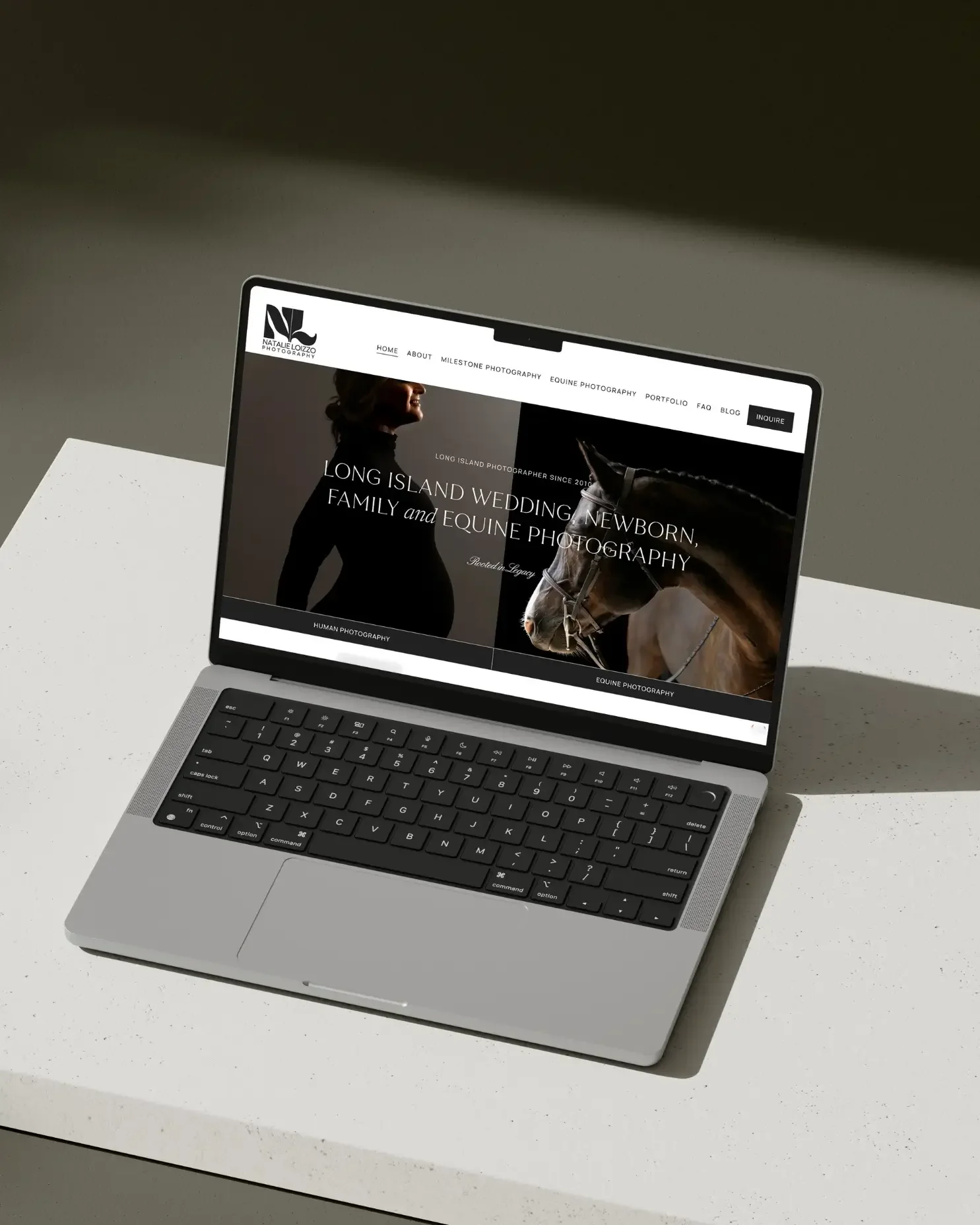
Your homepage headline is doing more work than any other line of copy on your site. It's what someone reads in the first three seconds to decide whether they're in the right place.
If your current headline is your business name, a vague tagline, or something like 'Welcome to my website' that's the first thing to fix.
A strong homepage headline does three things: says who you help, what you do for them, and signals the outcome. It doesn't need to be clever. It needs to be clear.
Read through yours right now. If someone who had never heard of you landed on your site and read your headline, would they immediately know: who you serve, what you offer, and why it matters to them? If not, rewrite it before anything else.
3. Clean Up Your Navigation
Navigation creep is one of the most common website problems I see, especially on sites that have been live for a few years. Pages get added, services change, redirects aren’t created and point to error pages, old offers stay in the nav long after they're relevant.
Your main navigation should have five to six links maximum. That's it. Everything else can live in the footer.
Go through yours and ask honestly: does every link in the nav serve a current visitor trying to make a decision? If the answer is no, pull it out.
A few quick fixes while you're there:
Remove 'Home' from the nav, your logo should link back to the homepage, which frees up a slot
Consolidate service pages if you have more than four individual service links at the top level
Make sure 'Contact' or your primary CTA is visible in the nav on every page without scrolling
Check mobile, open your site on your phone right now and see if the nav works the way it should
4. Update Your Copy, Especially Your Services Page
When did you last read your own website? Not skim it, actually read it, from the perspective of someone who doesn't know you?
Most service business websites have copy that made sense when it was written and quietly became outdated as the business evolved. Prices changed. Services got refined. The ideal client shifted. The voice got more confident. But the website didn't keep up.
The most important pages to review:
Homepage
Does the problem section still accurately describe what your ideal client is dealing with? Does the services overview reflect what you actually offer now? Are your testimonials current?
Services Page
This is your sales page, and it needs to be treated like one. Read every service description and ask: does this describe the outcome, or just the deliverables? Is the pricing current? Is there a clear CTA on each service section?
About Page
Does your story still feel true? Have your credentials, your client count, or your positioning changed since this was written? The about page is often the most visited page on a service website, and the most neglected.
Not sure what your pages should actually say?
The free Service-Business Website Blueprint breaks down every page of your service website, what belongs there, in what order, and exactly how to structure it to convert.
5. Add Fresh Social Proof
If the testimonials on your website are from clients you worked with two or three years ago, that's a problem. Not because they're not true, but because they signal to new visitors that nothing recent is worth showing.
A website refresh should always include:
At least two new testimonials added to your homepage and services page
Updated portfolio or case study work, your most recent projects, not your oldest
Updated client count or project count if you reference it, '100+ projects' sounds different from '135+ projects'
Specificity is what makes testimonials convert. 'She was great!' is not useful.When you're asking for testimonials, ask for the specific outcome, not the general experience.
6. Find and Fix Broken Links
Broken links hurt you in two ways: they're a bad experience for visitors, and they're a signal to Google that your site isn't being maintained. Both cost you trust.
Common places broken links hide:
Main navigation, especially if you've ever renamed or deleted pages
Blog posts, old posts often link to pages that no longer exist or renamed
Footer navigation, easy to forget when making changes
Social media icons, if you've changed handles or platforms
CTA buttons, especially ones linking to booking tools or forms you've updated
A quick way to check: use a free tool like Broken Link Checker or simply go through your most visited pages manually and click every link. It takes twenty minutes and almost always uncovers something.
And while you're at it, make sure you have a custom 404 error page set up. When someone does hit a broken link, a good 404 page keeps them on your site instead of bouncing them off it entirely.
7. Check the Technical Basics That Most People Skip
This is the part of a website refresh that gets ignored most often, and it's the part that affects SEO more than anything visual.
Update Your Copyright Year
This takes thirty seconds and signals to every visitor that your site is actively maintained. If your footer still says © 2022, fix it today.
Check Your Page Titles and Meta Descriptions
Every page on your site should have a unique, descriptive title tag and a meta description. These are what show up in Google search results, they're what someone reads before they decide to click. If they're missing or generic, you're invisible and unclickable even when you do rank.
In Squarespace, go to each page → Settings → SEO. Write a title that includes your main keyword and is under 60 characters. Write a meta description that gives someone a reason to click, under 155 characters.
Optimize Your Images
Large unoptimized images are one of the main reasons Squarespace sites load slowly. Slow sites rank lower and lose visitors faster. Before uploading any image, compress it. For Squarespace, aim for under 500KB per image. File names matter too, 'IMG_4823.jpg' tells Google nothing. 'squarespace-website-design-for-therapists.jpg' tells Google exactly what it's looking at.
Connect Google Search Console
If your site isn't connected to Google Search Console, do this now. It's free, it shows you exactly which queries are bringing people to your site, which pages are indexing, and what technical errors Google has found. This is the single most useful tool for understanding how your website is actually performing in search.
When a Website Refresh Isn't Enough
A refresh works when the bones of your site are solid but the surface needs work. When the structure is right, the pages are in the right order, and the copy just needs updating.
But there are situations where a refresh won't fix the real problem:
Your brand has changed significantly, different positioning, different ideal client, different price point, and the whole site needs to be rebuilt around the new version of your business
Your site was built on a template and the layout itself is creating conversion problems that copy changes can't solve
You're embarrassed to send people there, if it fundamentally doesn't reflect the level you operate at, surface updates won't fix that feeling
You've outgrown DIY, the site has been patched together over years and the inconsistencies run too deep to fix without starting clean
If any of those feel true, a refresh is just delaying the inevitable. The question then becomes how to approach a full redesign strategically, which is a different conversation.


Not Sure Where to Start?
The $250 Website Audit gives you a personalized video walkthrough of your specific site, what's working, what's not, what to fix first, and what can wait. It's the fastest way to get a clear action plan without committing to a full redesign.
Or if you're past the 'refresh vs. redesign' question and ready to build something properly, book a free discovery call and let's talk about what a custom build looks like for your business.
