
What Makes a Photography Portfolio Website Actually Convert
Photography is one of the most competitive service industries online. Someone planning a wedding, building a brand, or hiring a family photographer is comparing multiple photographers in a single sitting, and making a gut decision about who to trust with something that matters.
Your photos are the reason they consider you. What they see on your portfolio website is the reason they actually reach out, and gives them an easy way to take the next step.
Here's what separates a photography portfolio that books clients from one that just a gallery display of photos.
What Is a Photography Portfolio?
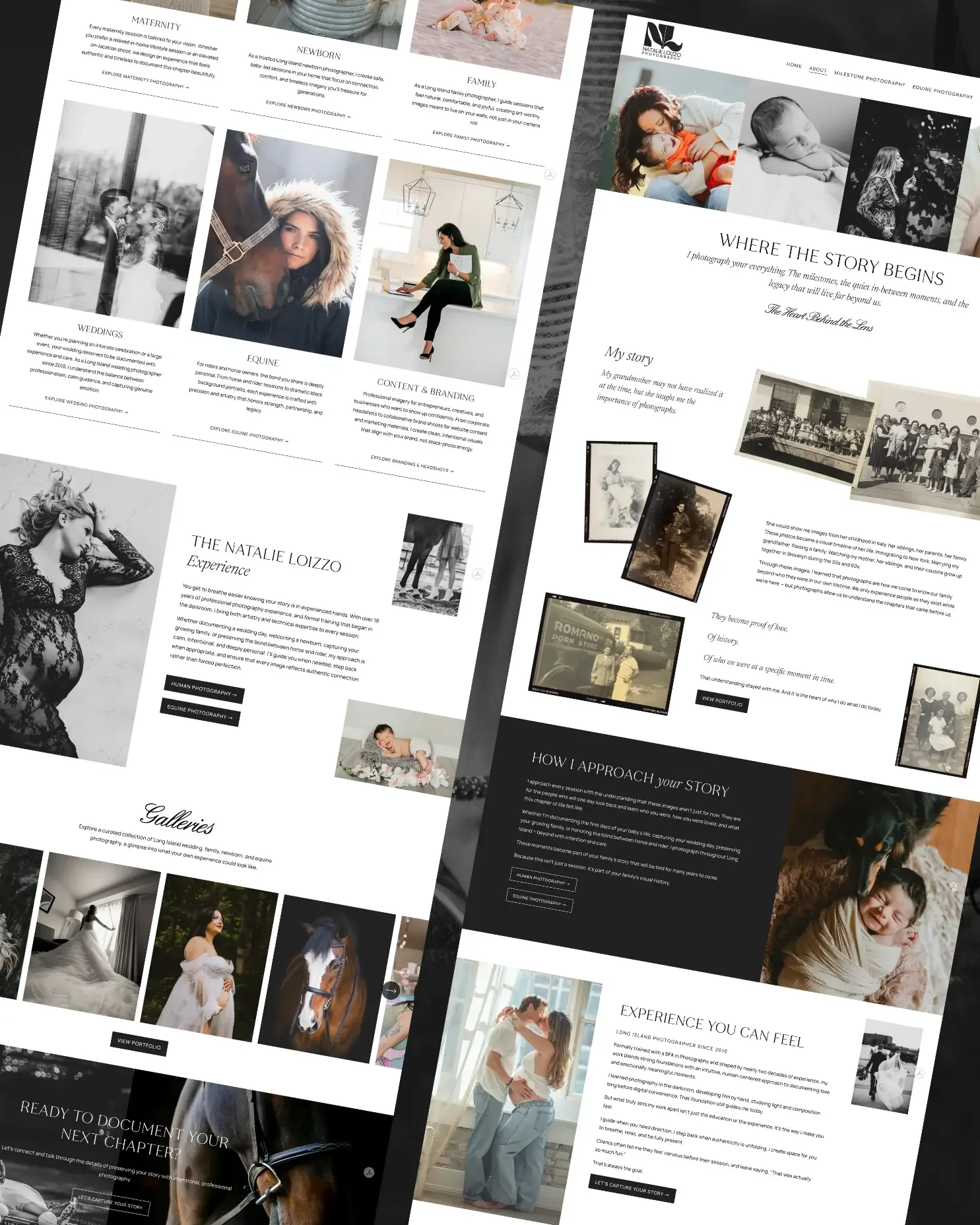
A photography portfolio isn't just a gallery of your best shots. It's a curated experience that shows a potential client what it's like to work with you. Your style, your range, and the specific kind of session or shoot you want to do more of.
A gallery shows images.
A portfolio makes a case.
That distinction matters more than most photographers realize when they're building their site, because it changes how you think about every decision, from which images to include to how the whole site is structured around them.
Your Whole Site Is the Portfolio, Not Just the Gallery Page
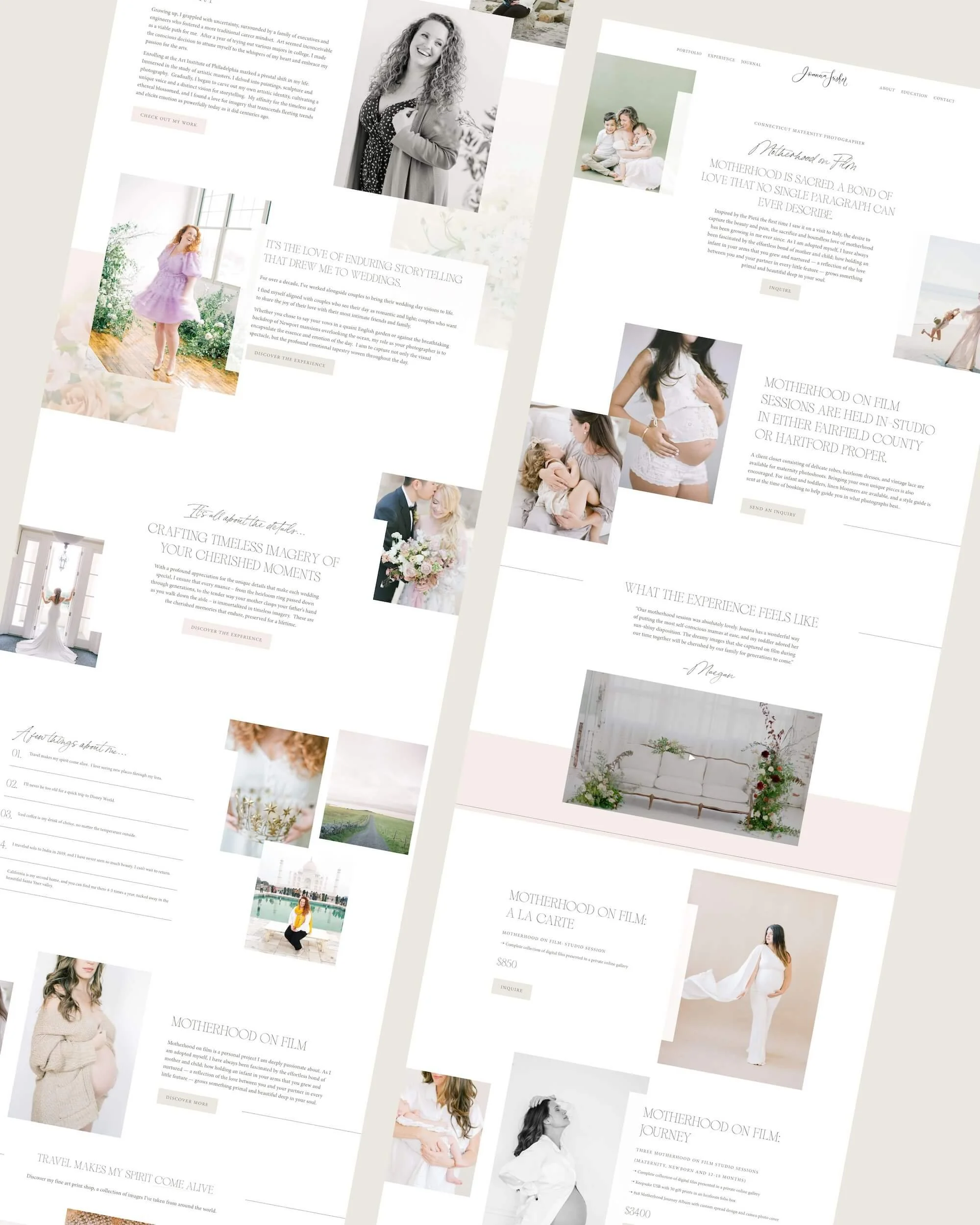
One of the most common photography portfolio website mistakes is treating "portfolio" like a single page instead of the entire site. Your homepage should lead with your strongest work immediately, not make someone click into "portfolio" before they see anything worth staying for. Your about page needs images too, and a photo of you! Because it's part of how someone gets to know you and your work. Even your services or investment page is a chance to reinforce quality. Every page someone lands on is setting the scene for the booking, whether it's built to or not.
What to Include When You Create a Photography Portfolio Website
A strong portfolio is more than a folder of your best shots. Start with your featured work, the 8 to 12 images that best represent you, not a scroll through everything you've ever shot. Then build around it: a little process or behind-the-scenes content so people see how you work, not just the final result, and testimonials placed near the galleries they're actually talking about instead of parked alone on a page no one reads in context.
Context matters as much as the images themselves. About the sessions, the locations, or how you work turns your photos into a story. Every portfolio, no matter how beautiful, needs a clear next step too: pricing range, an inquiry form, or a straightforward way to actually book you.
Signs Your Photography Portfolio Isn't Working
It takes more than a couple seconds to load, especially on mobile. Photographers typically have a lot of photos on their website and if not compressed and formatted properly, has the potential to slow the site speed down.
Your best work is buried below dozens of lower-priority images
There's no clear direction, visitors don't know where to look first
It looks fine on desktop but feels clunky or cramped on a phone
It feels like a template you customized once and never touched again
Someone could scroll the whole thing and still not know how to inquire
If your portfolio is quietly doing any of these, it's costing you bookings you'll never know you lost.
What Makes a Photography Portfolio Website Actually Convert
Once the fundamentals are in place, a handful of specific decisions separate a portfolio that converts from one that just sits there looking nice.
Fast Load Times
Image-heavy sites need real optimization, not just "good enough" compression. A gallery that takes too long to load loses visitors before they see a single photo, no matter how strong the work is.
Curated Over Comprehensive
Fifteen strong images will always outperform sixty mixed ones. Editing your portfolio down is one of the hardest parts of building it, but it's also one of the highest-leverage decisions you'll make.
A Clear Structure That Guides the Eye
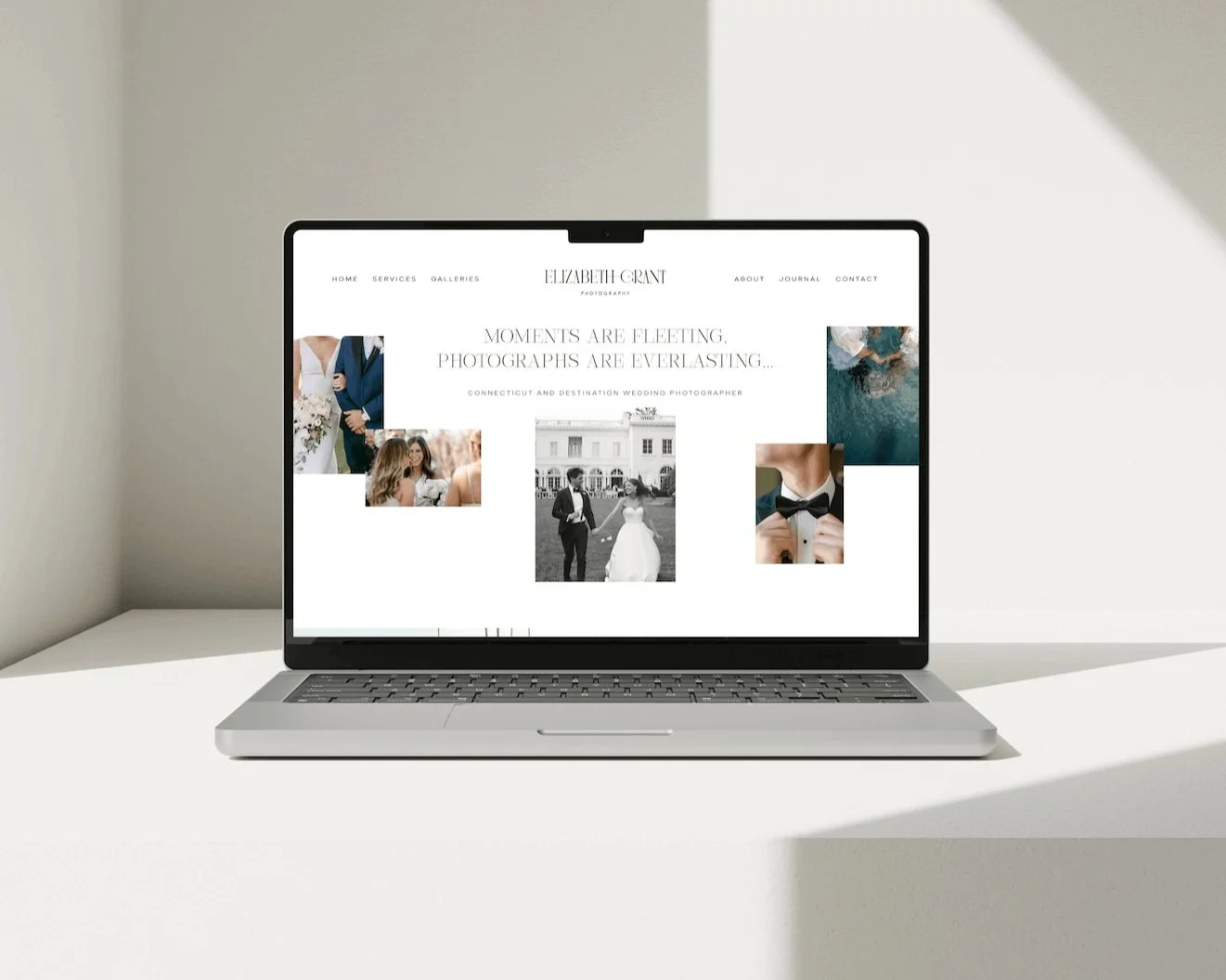
Your strongest work should lead every gallery, with intentional pacing after that, not a random dump of images in upload order.
Story Alongside the Images
Including copy and context on who you shoot for and how you work turns a simple gallery into a website with narrative. It's often the difference between someone admiring your photos and someone imagining themselves as your next client.
An Obvious Next Step
Every page needs a clear next step, not just one contact link buried in the navigation. If someone falls in love with your work on page four, they shouldn't have to hunt for how to reach you.
A Mobile-First Experience
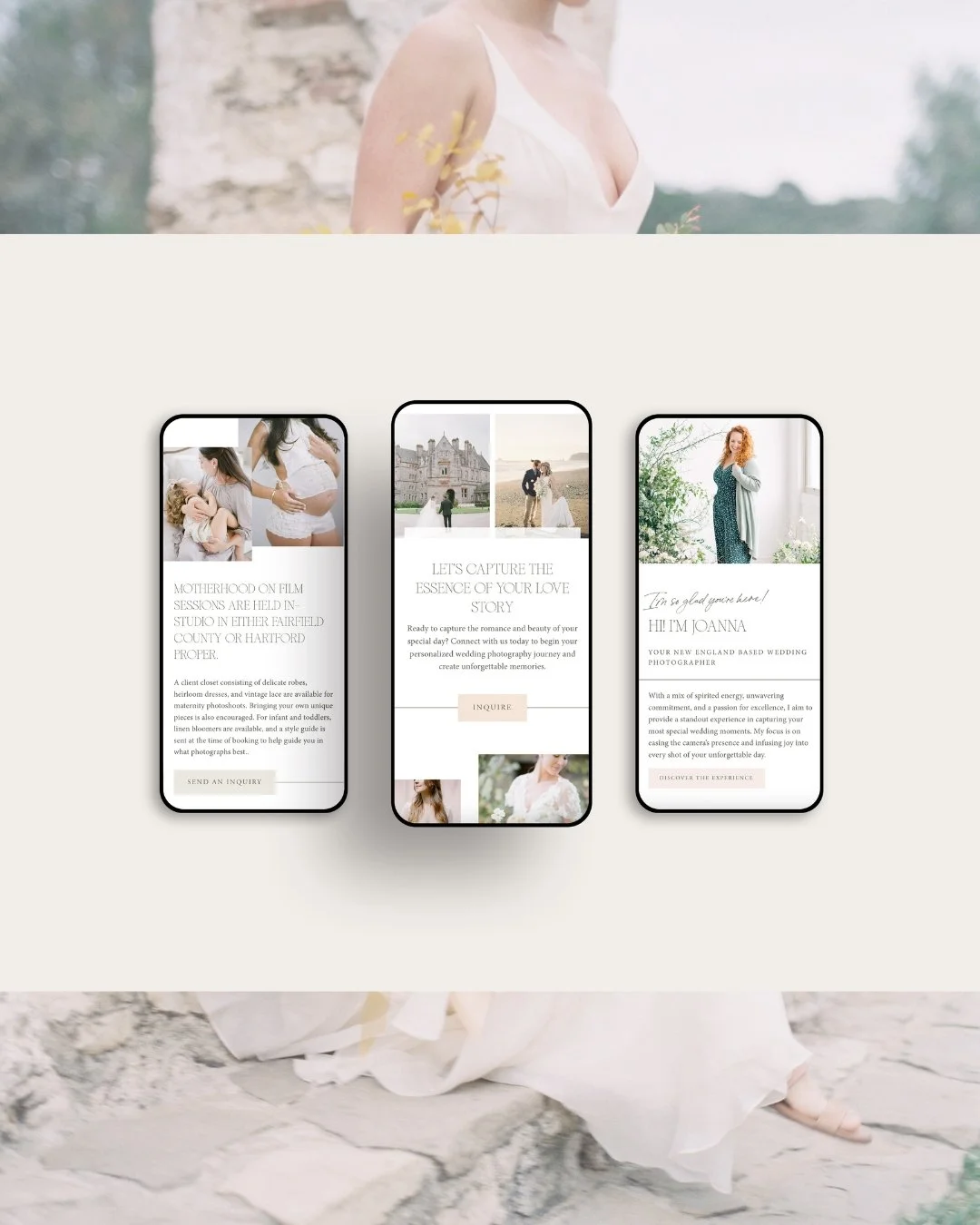
Most people are scrolling your portfolio from their phone, often while comparing you to two or three other photographers in the same sitting. If your site isn't built mobile-first, you're competing at a disadvantage before they've even seen your best shot.
A portfolio's job isn't to show everything you've ever shot. It's to show the right things that tell a story, to the right client.
Photography Portfolio Mistakes to Avoid
Uploading every image from a session instead of the strongest handful
No context, just photo after photo with nothing to orient the visitor
A generic template that wasn't built with image-heavy sites in mind
Contact information that's hard to find or buried at the very bottom
Inconsistent editing or presentation style across different galleries

Built for Photographers, on Squarespace
I build exclusively on Squarespace, and for photographers specifically, it's one of the strongest platforms available. Built-in gallery layouts are designed for image-heavy sites, load times stay fast when it's set up correctly, and updating with new sessions afterward doesn't require a designer.
As a Squarespace Circle Platinum Member, I know how to configure image compression, page speed, and gallery user experience in ways most DIY sites get wrong, which is usually the real difference between a portfolio that loads beautifully and one that quietly loses visitors.

Ready for a Portfolio That Books You Clients?
Your photography is the reason clients choose you. Your portfolio is the reason they reach out in the first place. If yours isn't doing that job yet, it might be time for a website built specifically around how photography portfolios actually convert.
