
5 Signs Your Website Is Costing You Clients (And How to Fix It)
There's a version of a bad website that's easy to spot, outdated design, broken links, text that hasn't been updated since 2018.
That's not the website I'm talking about.
The website I'm talking about looks fine. Maybe even pretty good. It has a homepage, a services page, an about section. It was built with care. And yet, it's quietly costing you clients every single week.
After building over 125+ websites for service-based businesses, I've learned that the most expensive website problems aren't visible. They're strategic. They live in the copy, the structure, the missing systems, and they're the reason people visit your site and leave without reaching out.
Here are the five signs to look for, and exactly what to do about each one. (And if you want to go deeper, my free Website Audit Guide walks you through a full review of your site.)
Sign #1: Your Homepage Doesn't Pass the 5-Second Test
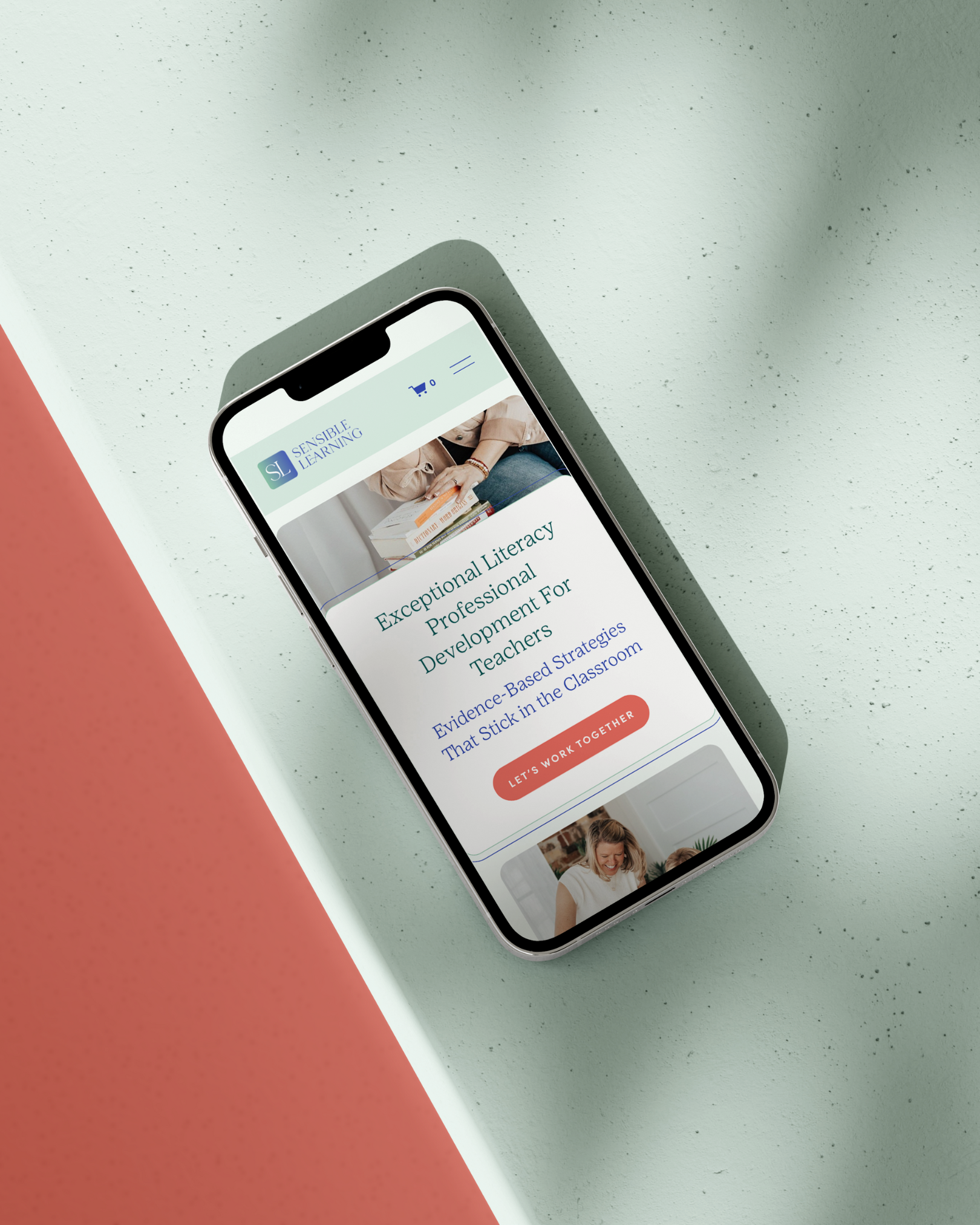
When someone lands on your website for the first time, they make a split-second decision: is this for me? That decision happens in about five seconds or less, before they've read your about page, before they've scrolled to your services, before they've seen your testimonials.
If your homepage doesn't clearly communicate who you help and what you do for them within those first few seconds, most people will leave. Not because they don't need what you offer, but because they couldn't tell fast enough that you were the right fit.
What to look for:
Does your homepage headline say who you help specifically, not just your business name or a vague tagline?
Does it communicate what changes for your client when they work with you?
Is there a clear next step above the fold? (before anyone has to scroll)
How to fix it:
Rewrite your homepage headline using this simple formula: [What you do] + [who you help] + [the outcome they get]. It doesn't have to be clever. It has to be clear.
For example: 'Strategic brand and website design for service businesses ready to grow with intention' tells you exactly who it's for, what the service is, and what the outcome looks like. That's the standard.
Your homepage is a conversation with your ideal client, not a brochure about your business. Start with them.
Sign #2: Your Website Copy Sounds Like Everyone Else in Your Industry
This one is harder to see when you're close to your own business, but it's one of the most common small business website design mistakes I come across.
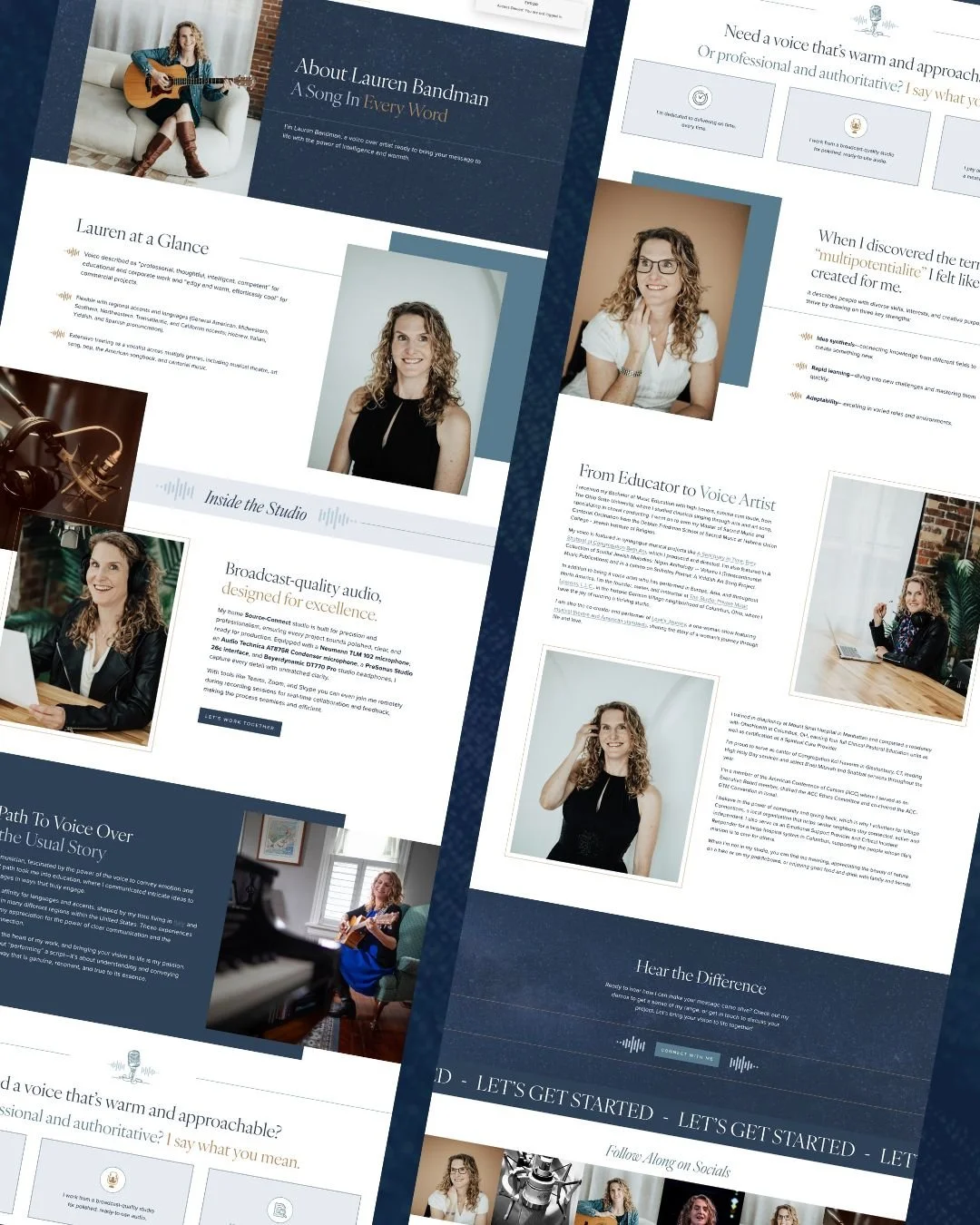
Whatever it is, the way you tell your story online can make all the difference.
When you've been in your industry for a while, you start to absorb its language. You use the same words, the same phrases, the same framing as every other business in your space. And your website starts to sound like a template, technically correct, professionally written, but completely forgettable.
Your ideal client is comparing you to other options. If your copy reads the same as everyone else's, price becomes the only differentiator. And that's not a game worth playing.
What to look for:
Does your copy use language your ideal client actually uses to describe their own problems, or industry language they might not recognize?
Does your About page tell a story that creates genuine connection, or does it just list your credentials?
Could your services page copy be swapped onto a competitor's website without anyone noticing?
How to fix it:
Read your copy out loud. If it doesn't sound like you talking to a client, if it sounds like a LinkedIn bio or a formal proposal, rewrite it. Use the language your clients use in their own words. Talk about their specific frustrations, their specific goals, their specific situation.
The businesses with the best-performing websites aren't necessarily the best at what they do, they're the best at communicating why they're the right fit for the right person. That starts with copy.
Sign #3: You Have No Clear Call to Action, or Too Many
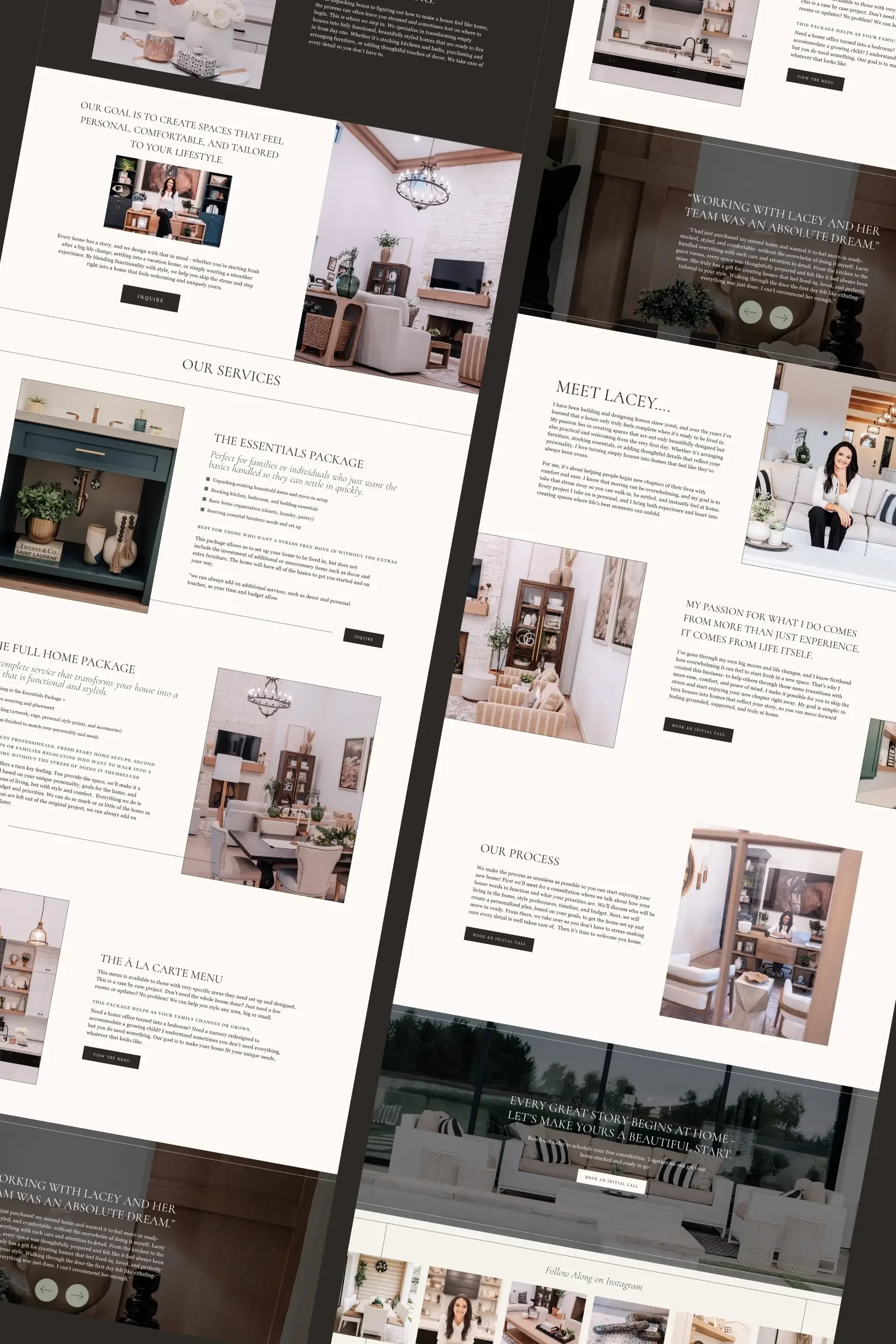
Every page on your website should have one job: move the visitor one step closer to working with you. That job gets done through your call to action: the button, the link, the instruction that tells them exactly what to do next.
Two things kill conversions here.
The first is no CTA at all, pages that just end, leaving visitors to figure out the next step on their own.
The second is too many CTAs, five different places to click, three different things being asked, no clear priority.
Both have the same result: people leave without doing anything.
What to look for:
Does every page on your site have at least one clear CTA?
Is your primary CTA — book a call, inquire, download your freebie — repeated more than once on your homepage?
Are you asking visitors to do more than one thing at a time on any given page?
How to fix it:
Pick one primary action you want visitors to take. For most service-based businesses, that's booking a discovery call or sending an inquiry. Make that the CTA that appears consistently, in your navigation, on your homepage, at the end of every services section, and at the bottom of every blog post.
Secondary CTAs (like downloading a freebie or reading a blog post) are fine, but they should never compete with your primary ask. One clear next step, repeated, is always more effective than a menu of options.
Sign #4: Your Website Isn't Showing Up on Google
You could have the most beautiful, well-written website in your industry, and if Google doesn't know it exists, it's not working for you.
Search engine optimization (SEO) is one of the most valuable long-term investments in your website, and it's also one of the most misunderstood. It doesn't require a technical background or a separate agency. For most small business websites, it starts with one simple thing: making sure the words on your pages match what your ideal clients are actually typing into Google.
Search engine optimization (SEO) is one of the most valuable long-term investments in your website, and it's also one of the most misunderstood. It doesn't require a technical background or a separate agency. For most small business websites, it starts with one simple thing: making sure the words on your pages match what your ideal clients are actually typing into Google.
What to look for:
Do your page titles and headings include the specific phrases your ideal client would search? (e.g. 'nutritionist for digestive issues' rather than just 'my services')
Does your homepage copy mention your location if you serve local clients?
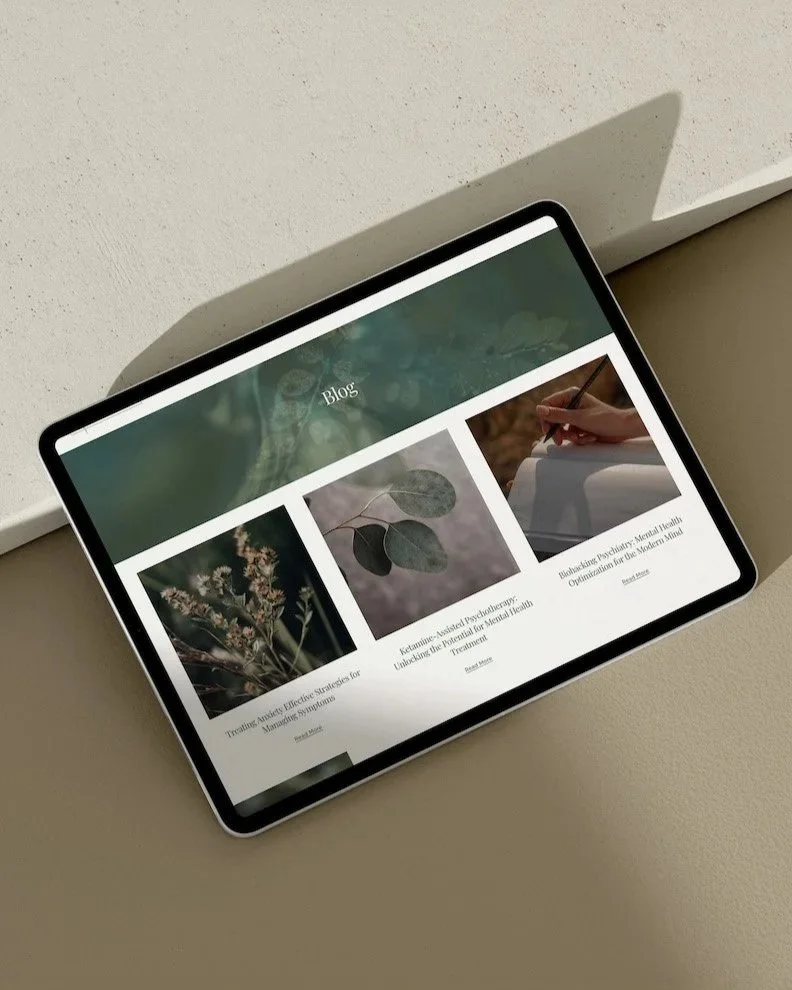
Do you have a blog with consistent, keyword-rich content, or is your site essentially static?
How to fix it:
Start with keyword research, figure out what your ideal clients are actually searching for, and make sure those phrases appear naturally in your headings, your page copy, your image descriptions, and your meta titles. You don't need to stuff keywords, you need to use the right language intentionally.
A blog is one of the most powerful SEO tools available to small businesses, each post is an opportunity to rank for a new search term and bring a new person to your site.
When I build websites for service-based businesses, SEO strategy is woven into the copy from the very beginning, not added as an afterthought. It makes a significant difference in how quickly a new site starts getting found.
Sign #5: Your Website Looks Like Your Business Did Two Years Ago
Businesses evolve. Pricing changes. Services get refined. Expertise deepens. Your ideal client shifts. And your website, if it hasn't been touched since you first built it, is still telling the story of where you were, not where you are.
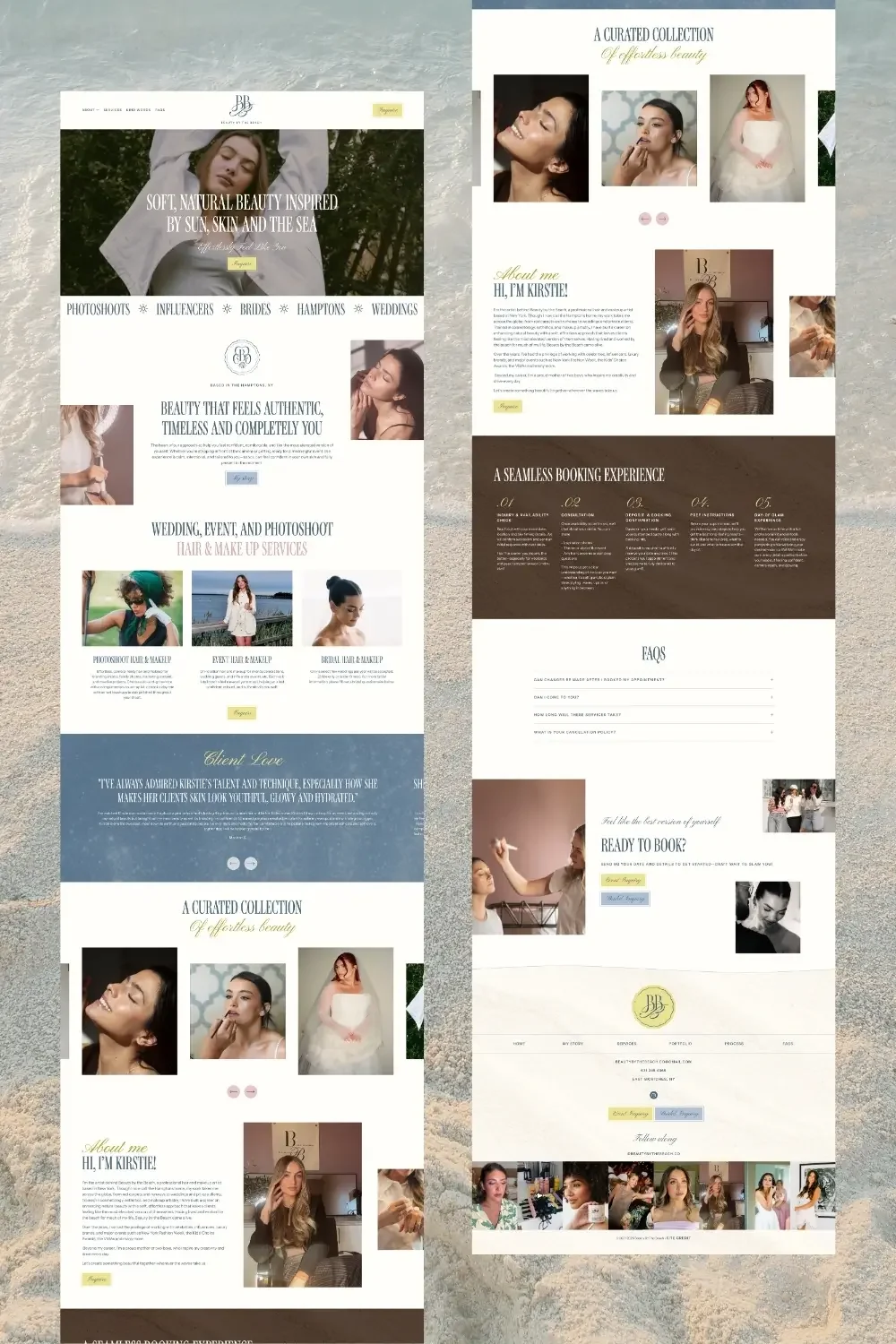
This is one of the most common reasons established service businesses lose clients they should be winning. They've leveled up in every real way, their skills, their results, their positioning but their website is still communicating the earlier, scrappier version of the business. And potential clients, who are making decisions based entirely on what they can see, make a judgment call accordingly.
What to look for:
Does your website reflect your current pricing and positioning, or where you were when you first launched?
Does the design feel aligned with the level of client you're trying to attract now?
Are your photos, testimonials, and portfolio work current, or are they years old?
Does your brand (your colors, fonts, logo) feel cohesive and intentional, or DIY?
How to fix it:
Start by auditing what's outdated. Update your services/pricing page, refresh your testimonials, swap in recent portfolio work.
Sometimes small updates make a significant difference.
But if your brand itself is the problem, if the visuals don't match the level you're operating at, that's a deeper fix. A brand identity refresh followed by a strategic website redesign is often the clearest path from 'my website is fine' to 'my website is actually getting me clients.'
You've worked hard to build your expertise and your reputation. Your website should be doing that same work for you, not holding you back from it.
How to Know Which of These Website Design Tips Applies to You
Reading through this list, you probably recognized one or two (or all five) of these signs in your own website. That's actually a good thing, clarity about the problem is the first step toward fixing it.
Here's a simple way to prioritize:
start with Signs 1, 2, and 3, homepage clarity, copy, and CTA.
start with Sign 4, SEO and content strategy.
start with Signs 2 and 5, positioning and brand alignment.
Not sure where your site stands? My free Website Audit Checklist [link] walks you through a structured review of every key element — so you know exactly what to focus on.

Ready for a Small Business Website That Actually Works for You?
If you've read through these signs and realized your website needs more than a few tweaks, if it needs a strategic overhaul, that's exactly what we do.
We specialize in brand and website design for service-based businesses — coaches, consultants, wellness professionals, wedding industry creatives, attorneys, and more. Our process starts with strategy and ends with a website that's built to attract your ideal client, seen on Google, and work behind the scenes so you don't have to.
Discovery calls are free, low-key, and a good starting point for any service business ready to stop leaving clients on the table.
Book a free discovery call below and let's talk about what's possible for your website.
Or if you're not quite there yet, start with the free Website Audit Guide and take stock of where you are.
